

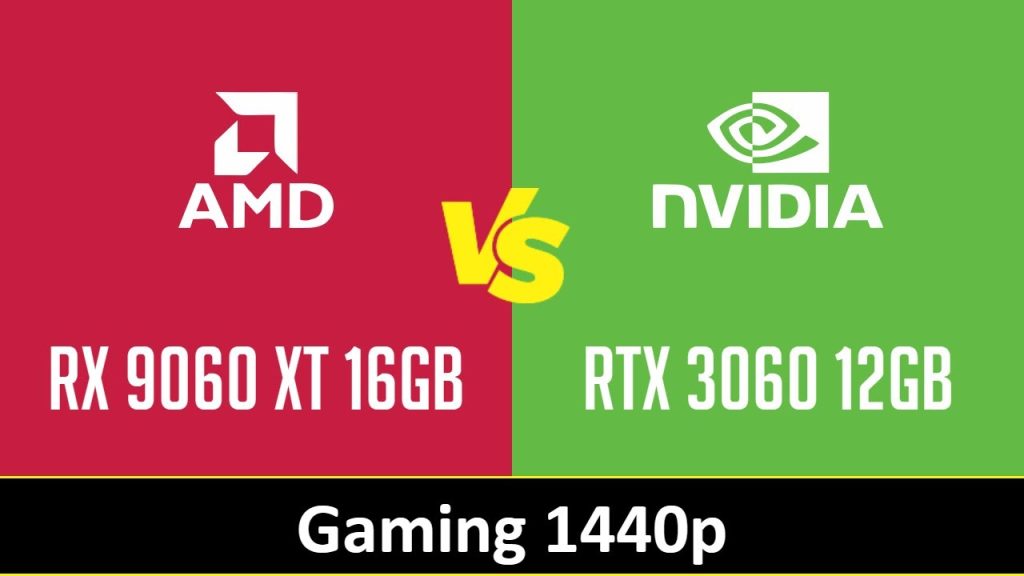
Verdict: The Radeon RX 9060 XT 8 GB delivers higher raw frame rates and better performance‑per‑dollar than the GeForce RTX 3060 12 GB, so it’s the smarter upgrade for most Balkan gamers. The only real caveat is its 8 GB VRAM, which may bite on future titles that need more memory.
Raw performance comparison
At 1080p Ultra the RX 9060 XT reaches 93.2 fps, while the RTX 3060 tops out at 61.5 fps source. That’s a 51 % jump in frame rate. The price gap is only $30 – $299.99 for the AMD card versus $329.99 for the Nvidia source – giving the RX 9060 XT roughly 1.7× more FPS per dollar at 1080p.
On 1440p Ultra the numbers stay in the same direction. The RX 9060 XT hits 62.5 fps, the RTX 3060 only 41.9 fps source. The price difference again yields about 1.6× better FPS per dollar for the AMD part.
Even at 4K Ultra the advantage narrows but remains. The RX 9060 XT averages 29.7 fps, the RTX 3060 22.2 fps source. The performance‑per‑dollar ratio is still 1.5× in favor of the AMD card.
Ray‑tracing head‑to‑head
Ray‑tracing is the only area where the Nvidia card has a slight edge in raw numbers, but the difference is trivial. The RX 9060 XT scores 33.0 fps, the RTX 3060 30.4 fps source. Since the AMD part is $30 cheaper, it still offers a modest value advantage even for RT‑heavy titles.
Price in the Balkan market
The cheapest EU listing for the RX 9060 XT is €376 in Germany source (as of 2026‑10‑19). The RTX 3060’s US launch price is $329.99 source, which is the only price we have in the facts. In practice, the AMD card is slightly more expensive in the EU, but the performance advantage more than offsets the price difference.
VRAM and future‑proofing
The RX 9060 XT comes with 8 GB of VRAM source. The data set doesn’t include a VRAM figure for the RTX 3060, so we can’t compare the two directly. However, 8 GB is tight for upcoming open‑world or high‑resolution texture packs, so you may need to lower settings on newer games.
Platform cost and bottlenecks
Both cards sit in the same price tier, so the rest of your build – CPU, RAM, PSU – stays unchanged. In a typical 1080p build, a mid‑range Ryzen 5 or Intel i5 won’t bottleneck either card. The RX 9060 XT’s higher raw throughput means you’ll see more frames from the same CPU.
When the RTX 3060 might still make sense
- You already own an RTX 3060 and the resale value of the old card offsets the $30 price difference.
- You need the extra VRAM for memory‑heavy titles you play today.
- You rely on Nvidia‑specific features that the AMD card doesn’t support.
Quick comparison table
| GPU | US price | EU price (cheapest) | VRAM | 1080p Ultra FPS | 1440p Ultra FPS | 4K Ultra FPS | 1080p Ultra RT FPS |
|---|---|---|---|---|---|---|---|
| GeForce RTX 3060 12 GB | $329.99 source | – | – | 61.5 source | 41.9 source | 22.2 source | 30.4 source |
| Radeon RX 9060 XT 8 GB | $299.99 source | €376 source | 8 GB source | 93.2 source | 62.5 source | 29.7 source | 33.0 source |
What the numbers don’t tell you
The benchmark data measures average FPS in synthetic tests; it doesn’t capture real‑world game stability, driver quirks, or power consumption. It also ignores regional warranty differences, potential import taxes, and resale value. Finally, the VRAM gap could become more significant on future titles that exceed 8 GB, something the benchmark scores can’t predict.
Further reading
Want to see how the RX 9060 XT stacks against other AMD options? Check out Radeon RX 7600: Is It Worth It in 2026?. For a quick way to calculate the best upgrade path for your current rig, use the GPU Upgrade Calculator: What to Buy for the Card You Own.
1 thought on “Radeon RX 9060 XT vs RTX 3060: Is the Upgrade Worth It?”
Comments are closed.