

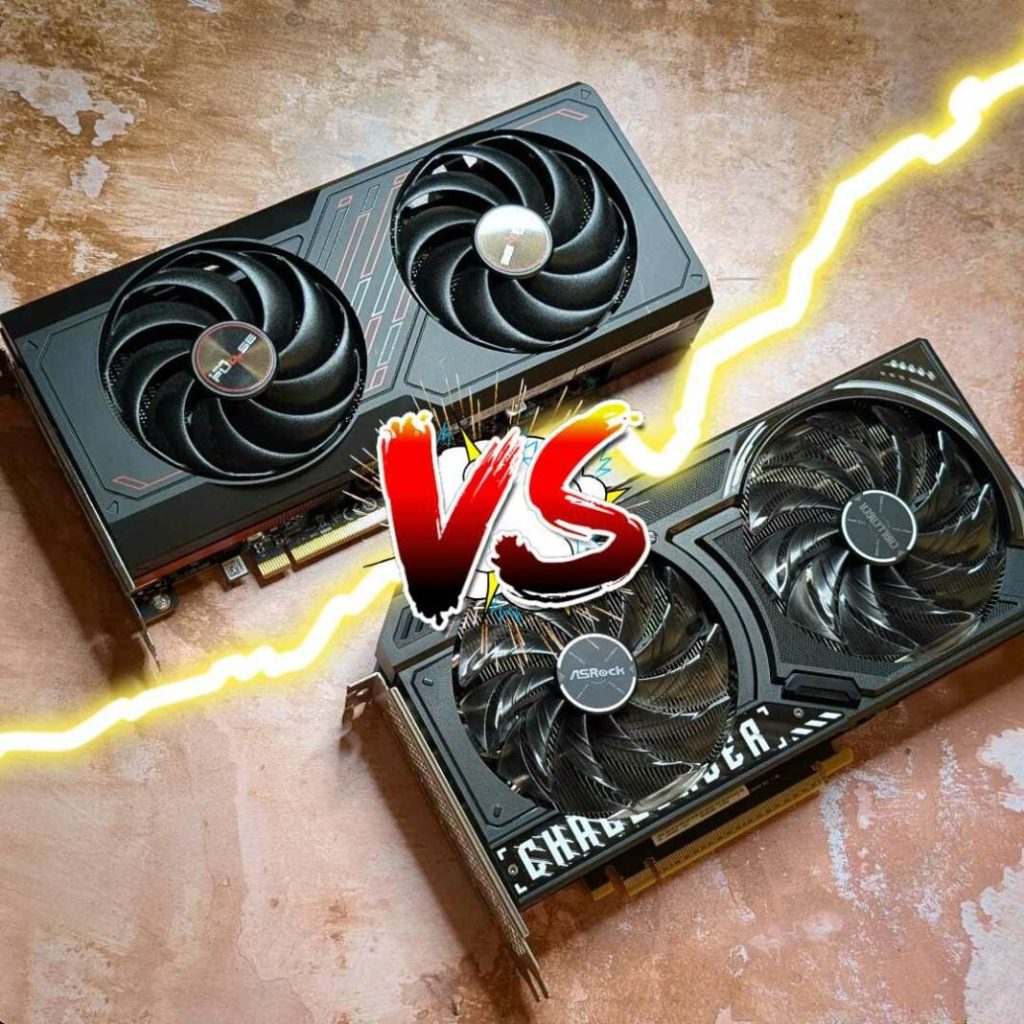
Intel Arc B570 vs Radeon RX 7600: The Verdict for Budget Buyers
Buy the Radeon RX 7600 if you can find it used, because it delivers superior performance per euro at 1080p, which is the resolution most budget gamers actually play. The Intel Arc B570 is the better choice only if you strictly require 10 GB of VRAM and are willing to pay a premium for new hardware that offers slightly worse frame rates at standard settings.
For the vast majority of readers stretching every euro in the Balkans or wider EU, the RX 7600 is the pragmatic winner. It costs less on the used market and provides higher average frame rates in the 1080p Ultra category. The Arc B570 has a niche appeal due to its extra VRAM, but the price difference and lower raw performance make it a harder sell for pure value seekers.
Price and Performance Metrics
Let’s look at the hard numbers first. As of October 2026, the lowest new EU price for the Intel Arc B570 is €302, found in Germany according to GPU Prix. The Radeon RX 7600 is listed at €317 new in Belgium, but the used market offers it from €239. This €63 difference in used pricing is significant for a budget build. If you’re buying new, the RX 7600 is actually €15 more expensive than the Arc B570, which flips the value proposition slightly. However, the used RX 7600 is the clear financial winner.
Performance indices from GPU Prix show the RX 7600 at 20/100 and the Arc B570 at 17/100. To calculate the value, we divide the price by the performance index. For a new RX 7600 at €317, that’s €15.85 per performance point. For the Arc B570 at €302, it’s €17.76 per point. If you buy the used RX 7600 at €239, the cost drops to €11.95 per point. That’s a substantial efficiency gain. You get more performance for less money on the used AMD card.
Frame Rate Comparison at 1080p and 4K
Most budget gamers play at 1080p. According to Tom’s Hardware benchmarks, the RX 7600 averages 69.9 FPS at 1080p Ultra, while the Arc B570 averages 63.5 FPS. That’s a 6.4 FPS difference, or roughly 10.1% more frames for the AMD card. In fast-paced titles, that difference is noticeable. The Arc B570 is not slow, but it’s not faster. It’s slower at the resolution where it competes.
At 1440p Ultra, the gap narrows. The RX 7600 hits 45.4 FPS, and the Arc B570 reaches 44.3 FPS. The difference is only 1.1 FPS. At this resolution, both cards are struggling similarly. If you plan to play at 1440p, the choice matters less, but the RX 7600 still holds a slight edge in raw throughput.
At 4K Ultra, the tables turn. The Arc B570 averages 19.6 FPS, while the RX 7600 averages 18.4 FPS. The Intel card is 6.5% faster here. This is likely due to its 10 GB of VRAM versus the RX 7600’s 8 GB. At 4K, texture memory becomes a bottleneck. The extra 2 GB on the Arc B570 helps it hold its own better than the AMD card. However, 19.6 FPS is not playable for most without heavy upscaling or lower settings. Neither card is a true 4K performer, but the Arc B570 degrades more gracefully.
Ray Tracing and VRAM Considerations
Ray tracing is a different story. The Arc B570 performs significantly better here. At 1080p Ultra with ray tracing, the Arc B570 achieves 19.8 FPS, while the RX 7600 manages 16.0 FPS. That’s a 23.75% performance advantage for Intel. If you care about ray-traced effects, the Arc B570 is the better technical choice. But for most budget gamers, ray tracing is a luxury feature that often forces you to lower other settings. The raw rasterization performance usually matters more for daily gaming.
The VRAM difference is the biggest long-term concern. The RX 7600 has 8 GB. The Arc B570 has 10 GB. Eight gigabytes is tight for a card you intend to keep for four years. Modern games are increasingly demanding on memory. You’ll likely hit texture pop-in or stuttering in newer titles sooner with the RX 7600. The Arc B570’s 10 GB gives it more headroom. This is the main reason to consider the Intel card despite its lower 1080p performance. It’s a longevity play.
Comparison Table
| Feature | Intel Arc B570 | Radeon RX 7600 |
|---|---|---|
| Lowest New EU Price | €302 | €317 |
| Lowest Used EU Price | N/A (Data not provided) | €239 |
| VRAM | 10 GB | 8 GB |
| 1080p Ultra FPS | 63.5 | 69.9 |
| 1440p Ultra FPS | 44.3 | 45.4 |
| 4K Ultra FPS | 19.6 | 18.4 |
| 1080p RT FPS | 19.8 | 16.0 |
| Performance Index | 17/100 | 20/100 |
What the Data Doesn’t Tell You
The numbers above don’t account for driver maturity or specific game optimization. Intel’s driver stack has improved, but it’s still newer than AMD’s. You may encounter bugs or require specific driver versions for certain titles. The data also doesn’t reflect power consumption or heat output, which matters for small cases or older power supplies. The total cost of ownership includes electricity and potential cooling upgrades, which aren’t captured in the sticker price.
Availability is another factor. The used RX 7600 price of €239 assumes you can find a working card. In the Balkans, the used market can be inconsistent. You might have to pay more or travel to find a good deal. The Arc B570 at €302 new is guaranteed to be in a box, but you pay for that certainty. If you can’t find a used RX 7600 below €300, the value gap disappears, and the Arc B570 becomes the safer bet for its VRAM headroom.
Final Recommendation
If you’re buying new, the choice is close. The Arc B570 is €15 cheaper and has more VRAM. The RX 7600 is faster at 1080p. For a new purchase, I lean towards the Arc B570 for the VRAM, provided you accept the lower 1080p frame rates. But if you can find a used RX 7600 for €239, buy it without hesitation. The performance per euro is unbeatable. You save money and get better 1080p performance. Just be ready to lower texture settings in newer titles when the 8 GB VRAM becomes a bottleneck. For most budget gamers, that trade-off is acceptable. The used RX 7600 is the smartest financial move right now.
If you’re building a full system around this GPU, consider the CPU pairing. A mismatched CPU can bottleneck these cards. Check out our guide on best budget gaming CPUs to ensure your processor doesn’t hold back your new graphics card. Also, if you’re looking at higher-end options later, the Radeon RX 9070 XT offers a significant jump in performance for those who outgrow these mid-range cards. For now, stick to the value kings.
2 thoughts on “Intel Arc B570 vs Radeon RX 7600: Which is Better Value?”
Comments are closed.