

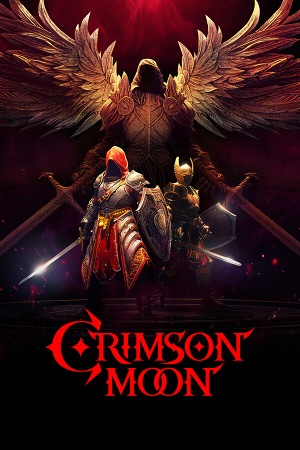
Crashing, stuttering, or lagging? This guide gets to the root of common problems in Crimson Moon, a beautiful but demanding game.
What’s going to make Crimson Moon run smoothly on your computer? First, you need to ensure you meet the Crimson Moon system requirements. These are listed on PCGamingWiki. If you have a laptop from 2010 or something like that, it’s probably not going to work very well.
Checking System Requirements
Crimson Moon is a demanding game, and its system requirements reflect this. A minimum of 8 GB RAM, an NVIDIA GeForce GTX 1060 or AMD Radeon RX 580, and a quad-core processor are required for smooth gameplay. If your computer doesn’t meet these specs, you may experience lag and stuttering.
For example, if you’re running on a laptop with integrated graphics, you might be out of luck. Integrated graphics can struggle to handle the game’s demanding visuals, leading to poor performance. On the other hand, a dedicated graphics card like an NVIDIA GeForce GTX 1660 Super or AMD Radeon RX 5600 XT will provide a significant boost in performance.
The thing is, the Crimson Moon graphics settings are really important. The resolution and anti-aliasing are very important for Crimson Moon. If your Crimson Moon game is running slowly, you can try making the resolution a little like 1080p or you can turn off the anti-aliasing completely for Crimson Moon. This will help your computer have resources to do the important things like making Crimson Moon look good.
Another thing you can try is checking how fast your storage drive is. A fast SSD can make a difference in how it takes for Crimson Moon to load and how well Crimson Moon runs. Some people have said that they got a lot of frame rates after they got a drive for Crimson Moon. In fact, an NVMe SSD like the Samsung 970 EVO Plus or WD Black SN750 can provide sequential read speeds of up to 3000 MB/s, making it ideal for loading large game files.
Tweaking Graphics Settings
About those Crimson Moon settings: you can try turning on multi-threading for the Crimson Moon graphics, which is in the Crimson Moon game settings menu. You can also try making the shadows and ambient occlusion a little less good for Crimson Moon. It’s about finding the balance between making Crimson Moon look good and making Crimson Moon run well.
For example, you can reduce the texture quality to medium or low, which will help improve performance without sacrificing too much visual fidelity. You can also try disabling motion blur and depth of field, as these effects can put a significant strain on your computer’s resources. Also, consider reducing the number of shadows cast by objects in the game world. This can be done by adjusting the ‘Shadow Quality’ setting to ‘Low’ or ‘Medium’, depending on your hardware.
Optimizing Performance
To keep your computer from getting too hot, you should check its temperature regularly. How hard the graphics card is working, how much memory it’s using for Crimson Moon – all this information will help you find any problems before they get really bad for Crimson Moon.
You can use tools like GPU-Z or HWiNFO to monitor your computer’s performance and identify potential issues. For example, if your graphics card is running at 80°C or higher, it may be causing the game to stutter and lag. Also, keep an eye on your CPU temperature, as high temperatures can also impact performance.
Monitoring Performance
To get the most out of Crimson Moon’s performance optimization features, you’ll need to monitor your computer’s performance regularly. This will help you identify any issues before they become major problems. Some key metrics to keep an eye on include frame rate, cPU usage, and memory usage.
For example, if your frame rate is consistently below 60 FPS, it may be worth adjusting the graphics settings or upgrading your hardware. Similarly, if your CPU usage is high, you may need to adjust the game’s resolution or turn off some of the more demanding features.
Advanced performance optimization Techniques
One advanced technique for optimizing Crimson Moon performance is to use a frame rate limiter. This can help prevent the game from running at an unplayable speed, even on lower-end hardware. Some popular frame rate limiters include FRAPS and Rivatuner.
Another advanced technique is to use a graphics card overclocking tool. Overclocking your graphics card can provide a significant boost in performance, but it also increases the risk of overheating and damage to your hardware. Be sure to research any potential risks before attempting to overclock your graphics card.
Conclusion
Remember: changing the Crimson Moon settings is something you have to do a little at a time. You have to be ready to make changes based on how your computer’s doing with Crimson Moon. If you’re patient and you keep trying, you should be able to get Crimson Moon to run smoothly on your computer.
For more information on optimizing Crimson Moon performance, check out our related article: Crimson Moon System Requirements.
✅ Verdict
Try tweaking these settings based on your hardware; keep an eye on performance and adjust accordingly.


